The Simultaneous Axis: Visual-Spatial Autistic Philosophy
Mapping the 3D spatial simulation, dead reckoning navigation, and visual scanning mechanics of an ageless mind.

Author’s Note: This essay expands on the Unwritten Architecture of the Mind by examining the tangible, daily mechanics of non-linear cognition. While my first piece focused on the somatic and spiritual dimensions of an ageless identity, this text documents how that same hardware interacts with the physical world. Mainstream education and psychology evaluate intelligence through a rigid framework of sequential, step-by-step processing. This piece subverts that standard by mapping the objective structural mechanics of object-spatial visualization, dead reckoning, and visual scanning. By exploring the deep intersection between mental fabrication and global pattern recognition, this text aims to validate the highly organized physics of a simultaneous operating system.
The Geometry of Timelessness
The social world forces the human mind to process reality down a flat, ticking timeline. It commands individuals to categorize their memories, their language, and their connections into strict, sequential brackets based on linear years. Within my own system, however, this linear hardware is entirely absent. My mind operates on a simultaneous axis. It maps existence through volume, depth, and immediate spatial geometry rather than chronological ticks. Because I do not store reality as a sequence of passing time, my baseline identity is fundamentally ageless. This non-linear hardware dictates every facet of my lived experience. It shapes how I build structures, how I navigate physical cities, and how my body registers human proximity.
The 3D Mental Simulator
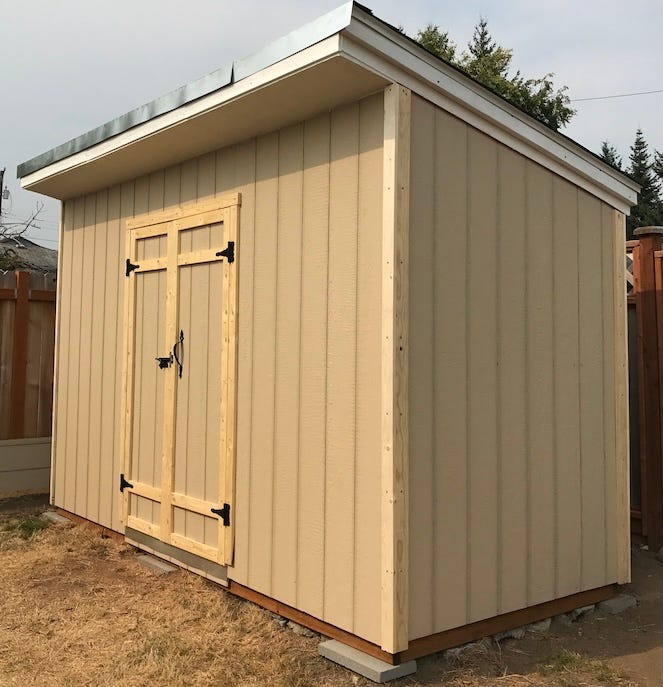
This simultaneous processing operates as a real-time visual engineering system inside my head. When I decide to build a physical structure like a shed, I do not use abstract math equations or written blueprints. Instead, I visualize the entire finished shed all at once. My brain works backward to calculate the project’s physical requirements. I determine the type of lumber required, the precise dimensions to cut each piece to optimize the material, and how they fit together purely through this internal 3D simulation. With this simulation, I figure out the exact shopping inventory.
The Sequential Bottleneck of Language
Because my brain prioritizes this whole-picture spatial processing, flat sequential tasks like phonics feel entirely out of reach. Phonics forces the mind to build a word brick-by-brick down a timeline of individual sounds. For my pattern-seeking brain, this slow auditory chain causes an immediate internal traffic jam. I experience this same output obstacle when interacting with symbols, even though I have very limited Chinese reading fluency. I may look at a complex character and recognize its meaning. It is like looking at the Mona Lisa and knowing exactly what it is, yet being completely unable to paint it from scratch. My mind acts as a visual scanner, but my hands lack the linear recipe to construct symbols stroke-by-stroke.
Navigating by Raw Presence
This exact spatial hardware dictates how I move through the physical world. When I travel, I navigate entirely by raw geometry, landmarks, and spatial orientation rather than relying on written street names or step-by-step verbal directions. My brain sub-consciously builds a live three-dimensional map of the terrain as I walk. I easily recognize the precise alignment of the streets I have already crossed because my internal compass tracks volume and depth. This system relies on dead reckoning, calculating my exact position relative to where I have already walked. This holistic parsing allows me to confidently return to any orientation, navigating entirely through the structural shapes of the environment.
The Canine Blueprint
This physical and landmark-based way of parsing reality mirrors the evolutionary mechanics of a canine. Dogs navigate their world completely detached from sequential scripts, abstract social labels, or step-by-step written instructions. They do not piece together their reality bit-by-bit down a timeline. Instead, they absorb their surroundings as a unified, immediate data field, matching geometric patterns and sensory shapes to find their orientation instantly. Both of our systems bypass flat, chronological rules to operate purely on raw, unmasked presence. By leaning completely into these spatial strengths, the mind remains insulated from arbitrary societal limits, operating entirely as a visual and mechanical engineer.
Explore the ‘Unwritten Architecture of the Mind’ series:
The Unwritten Architecture of the Mind: Beyond Chronological Metrics
Sensory Physics: The Myth of Autistic Coldness and the True Craving for Contact
The Cinematic Optical Illusion: Thoroughbreds and the Anatomy of Neurodivergent Loyalty